
Welcome to "Dirghajivitiam Adhyaya" or The Chapter of Desiring Longevity of Charaka Samhita Sutra Section.
The initial part of First Chapter begins with prayers and introduces the Divine Lineage of the wisdom of Ayurveda.
This describes how ancient sages noticed the increasing tendency of attracting disorders in common people and then held a symposium in Himalayan region and decided to bring Ayurveda wisdom for the masses.
This section can be further divided into these subsections...
- General Introduction of Chapter
- The Divine Lineage of Ayurveda
- The Himalayan Summit of Pious Sages
- Their Deciding to Send Sage Bhardwaj to Indra
- Sage Bhardwaj going to Indra and receiving Ayurveda
- Basic Nature of Ayurveda
- Significance and Benefit Received by Other Sages from Ayurveda Wisdom
Second section deals with one of the most important topics in entire Ayurveda - Fundamental Principles of Ayurveda. This is truly the foundation for learning Ayurveda.
The part introduces the framework that supports all the concepts and later practices of Ayurveda in a cohesive and integral manner. This is like the invisible thread inside the chain of pearls.
- Definition of Ayurveda
- Defining Life
- Fundamental Principles - The Six Substances - Matter, Attributes, Activity, Generality, Differentiation, Inherent Nature
- Three Doshas - Vata, Pitta and Kapha
- Three Primary Attributes - Satva, Rajas, Tamas
Dirghajivitiyam Adhyayam Chapter of Desiring Longevity
Desiring Longevity is the most appropriate begining of Charaka Samhita. Before writing more about it, I want you to have a taste of this.
Section 1 of First Chapter
General Introduction and The Divine Lineage of Ayurveda Wisdom

"Carak Samhita Sutrasthanam Prathamodadhyaya?"
This is one of the most Authoritative and Ancient Book of Indian Ayurvedic Medicine - Charaka Samhita, rather the most authoritative book on Ayurveda.
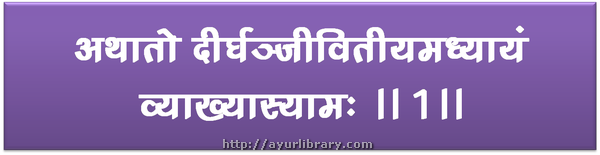
" Athāto dīrghaῆjīvitīyamadhyāyaṃ vyākhyāsyāmaḥ || 1||"
Here, The Desiring Longevity Chapter is being described. The Sanskrit word – dīrghaῆjīvitīyam – relates with desiring prolonged and healthy life.
Definitely, this includes qualitative and quantitative aspects of wellbeing.
This word - Atha - is considered auspicious and is used in the beginning of many Vedic literature. One fine example is Yoga Sutra of Sage Patanjali. (Atha Yoganushashnam - This is the discipline of Yoga.)

" Iti ha smāha bhagavānātreyaḥ || 2||"
This is as “Remembered” by Lord Aatreya. You can see the special regard attributed to the person – Sage Aatreya – who initiated this tradition of ancient Ayurvedic medicine.
The most important is the word – Smah – it means as cognized or remembered by. It signifies that the principles of Ayurveda are present in nature. You don't have to invent them or simple you need to discover or realize or attune to these principles to validate their presence in your life.
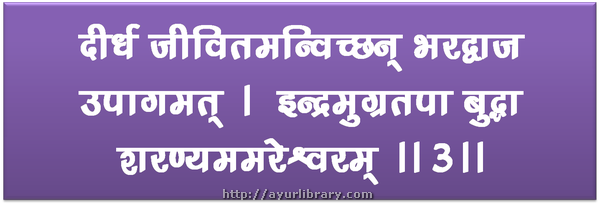
"Dīrdha jīvitamanivacchan bhardvāja upāgamat | Indramugratapā bhuddhā śaraṇyamamareśvaram || 3||"
Having desire for Longevity, Sage Bhardwaj went to Indra – the King of Gods – who is radiant with austerity, enlightened person, benevolent toward persons seeking guidance and shelter, and is immortal master.
These qualifies of Indra simply means that he is one of the perfect ones following Ayurveda principles and practices.
This practice also validates the way of being mentored as one of the most established channels of learning in India. It is definitely the most effective mode even in the present day.
We try to adopt this mode in this community of AyurLibrary.com and make it a collaborative place of learning Ayurveda.
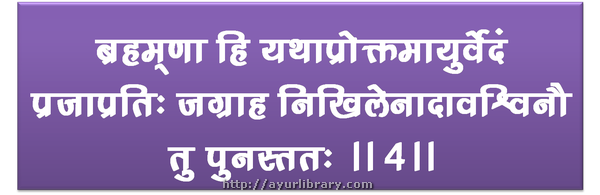
"Bhrahamṇā hi yathāproktamāyurvedaṃ prajāpratiḥ jagrāha nikhilenādāvaśvinau tu punastataḥ || 4||"
Daksha Prajapati received the wisdom of Ayurveda exactly as mentored by Brahma. Then, Ashwani Twins got it in its entirety from Daksha Prajapati.
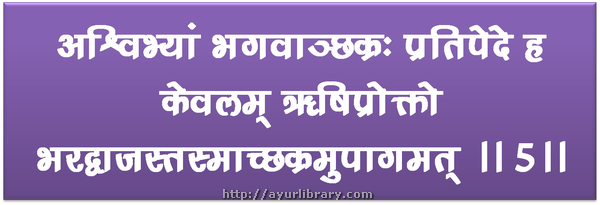
"Aśvabhyāṃ bhagavāῆchakraḥ pratipede ha kevalam ṛṣiprokto bharadvājastasmācchakramupāgamat || 5||"
Ashwani Twins gave this wisdom to Indra. Later, upon insistence of Sages, Bhardwaj received Ayurveda from Indra.
This introduces to the Divine Lineage of Ayurveda starting from Brahma -> Daksha Prajapati - > Ashwini Twins -> Indra as these figures are considered divine beings.
After that mundane lineage of Ayurveda started from Bhardwaj after being mentored by Indra.
Section 2
The Himalayan Summit of Pious Sages and Deciding to Send Bhardwaj to Indra
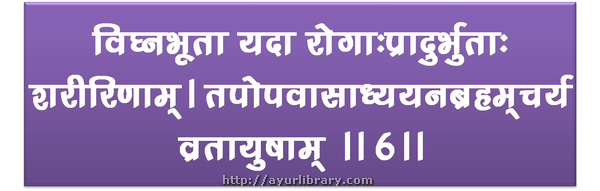
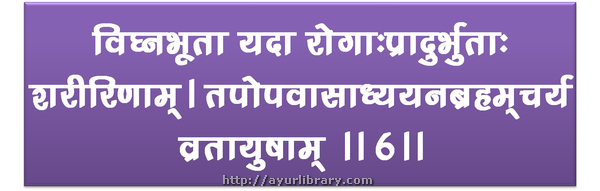
"Vighnabhūtā yadā rogāḥprādurbhutāḥśarīriṇām | Tapopavāsādhyayanabrahamcarya vratāyuṣām || 6||"
When disorders start to originate in the bodies of persons as impediments sabotaging their lives filled with austerity, fasting, disciplined study, celibacy, vowed observances and practices.
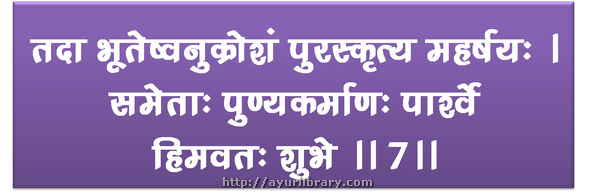
"Tada bhūteṣvanukrośaṃ puraskṛtya maharṣayaḥ | sametāḥ puṇyakarmāṇaḥ pāśrve himavataḥ śubhe || 7|| "
Then, benevolent Sages gathered at auspicious place near Himalaya to extend the gift of significant living to people.
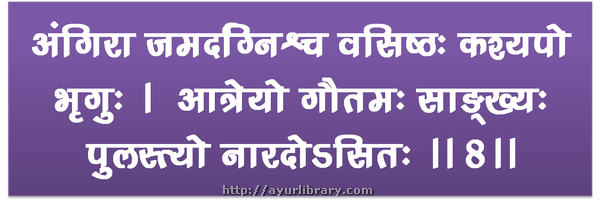
"Aṃgirā jamadagniśca vasiṣṭhaḥ kaśyapo bhṛguḥ | ātreyo gautamaḥ sāṅkhyaḥ pulastyo nāradositaḥ || 8||"
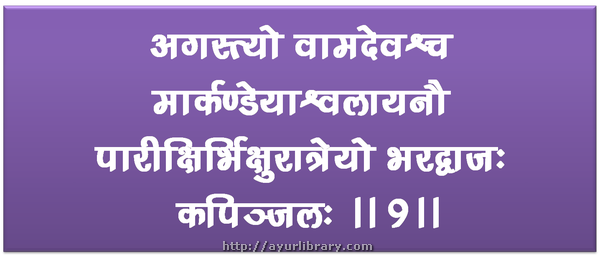
"Agastyo vāmadevaśca mārkaṇṅeyāśvalāyanau pārīkṣirbhikṣurātreyo bharadvājaḥ kapiῆjalaḥ || 9||"
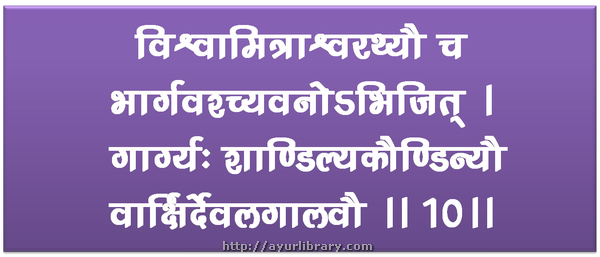
"Viśvāmitrāśvarathyau ca bhārgavaścyavanobhijit | gāgryaḥ śāṇḍilyakauṇḍinyau vārkṣirdevalagālavau || 10||"
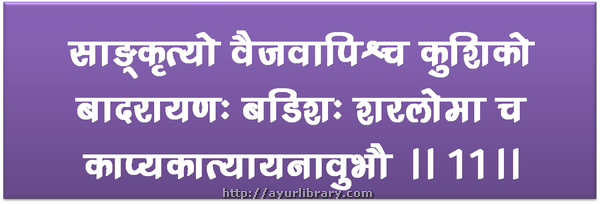
"Sāṅkṛtyo vaujavāpiśca kuśiko bādarāyaṇaḥ baḍiśaḥ śaralomā ca kāpyakātyāyanāvubhau || 11||"
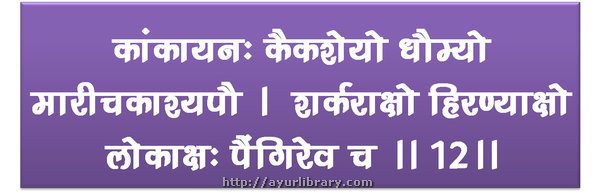
"kāṃkāyanaḥ kaukaśeyo dhaumyo mārīcakāśyapau | śarkarākṣo hiraṇyākṣo lokākṣaḥ paiṃgireva ca || 12||"
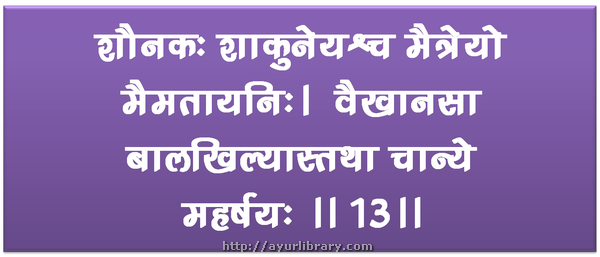
"Śaunakaḥ śākuneyaśca maitreyo maimatāyaniḥ | vaikhānasā bālkhilyāstathā chānye maharṣayaḥ || 13||"
Here, you will find the names of sages who attended the seminar or meeting… Angira, Jamdagni, Vasishtha, Kashyap, Bhrigu, Aatreya, Gautam, Sankhya, Pulatsya, Narad, Asita, Agastya, Vamadeva, Markandeya, Ashwalayana, Parikshi, Bhikshu Aatreya, Bhardwaja, Kapinjala, Vishwamitra, Ashwarathya, Bhargav, Chyavana, Abhijita, Gargya, Shandilya, Kaundinya, Varkshi, Devala, Galava, Sankritya, VaijavapiKushiko, & Badarayana, Badisha, Sharaloma, Kapya, Katyayana, Kankayana, Kaiksheya, Dhaumya, Marich, Kashyapa, Sharkaraksha, Hiranyaksha, Lokaksha, Paingirev, Shaunaka, Shakuneya, Maitreya, Maimtayani, Vaikhanasa, Balkhilya and other reputed sages gathered in the Himalayan Summit.
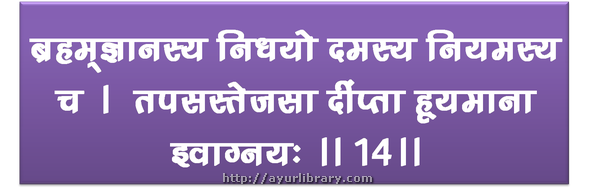
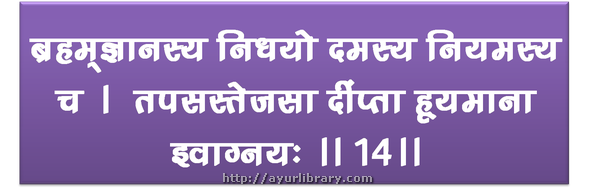
"Brahamjῆānasya nidhayo damasya niyamasya ca | tapasastejasā diṃptā hūyamānā ivāgnayaḥ || 14||"
All the sages were radiant like the sacred fire from the wealth of Supreme Wisdom, Dos and Don’ts (Appropriate and Significant Behavior) and Austerity.
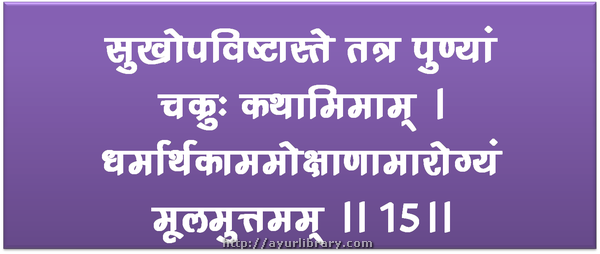
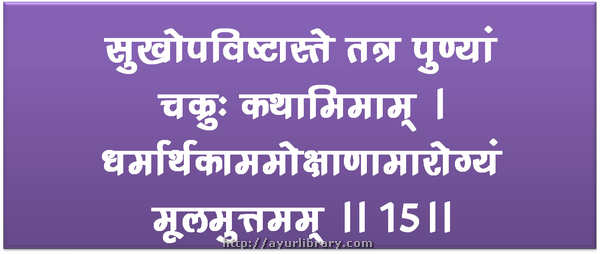
"Sukhopaviṣṭāste tatra puṇyāṃ cakruḥ kathāmimām | dharmarthakāmamokṣāṇāmārogyaṃ mūlamūttamam ||15||"
The Sages sat comfortably with full focus and poise and discussed measures for benefit of mankind.
The realized that Health and Wellbeing to be the foundational denominator for all the worthwhile pursuits of mankind, namely Systems, Values, Desires and Fulfillment.
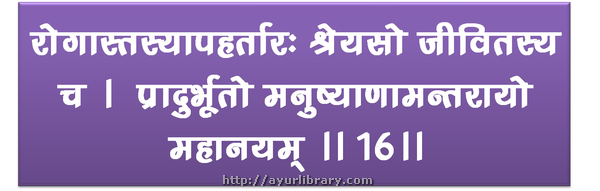
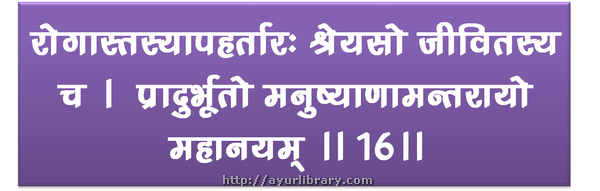
"Rogāstasyāpahartaraḥ śreyaso jīvitasya ca | prādurbhūto manuṣyāṇāmantarāyo mahānayam || 16||"
Disorders rob off efforts for significant and pleasant living, exist as great obstacles for mankind.
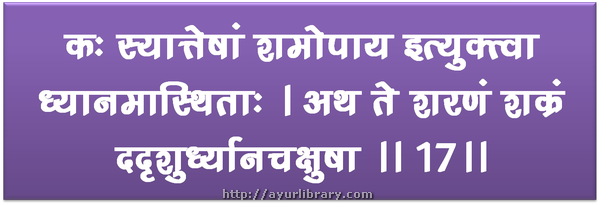
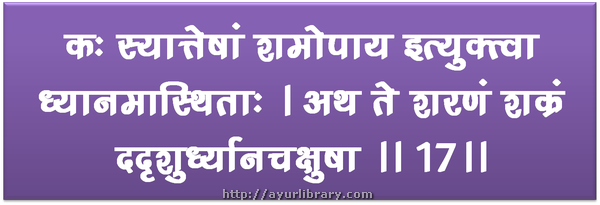
"Kaḥ syātteṣāṃ śamopāya ityuktvā dhyānamāsthitāḥ | atha te śaraṇa śakraṃ dadṛśudhryanacakṣuṣā || 17||"
Reflecting about measures to combat Disorders, The Sages entered into deep meditative state. They resonated with the idea through inner eye of Intuition that they should seek shelter of Indra.
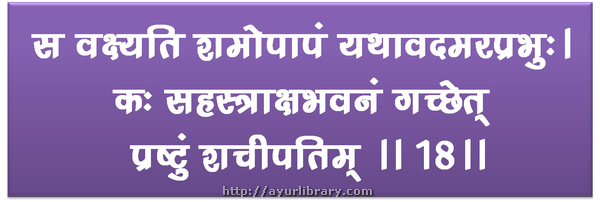
"Sa vakṣyati śamopāpaṃ yathāvadamaraprabhuḥ | kaḥ sahastrākṣabhavanaṃ gacchet praṣṭuṃ śacīpatim || 18||"
They observed that the measures for combating disorders should only be sought under the tutelage of Indra, the immortal God.
The natural question emerged about who should go to place of Indra, the husband of Shachi and the one having thousand eyes.
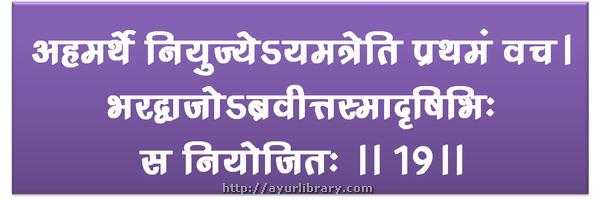
"Ahamarthe niyujyeyamatreti prathamaṃ vacaḥ | bharadvājobravīttasmādṛṣibhiḥ sa niyojitaḥ || 19||"
Bhardwaja took the initiative and presented himself for going to Indra. Other sages agreed and gave him this duty.
Bhardwaj Getting Ayurveda Wisdom from Indra and Fundamental Nature of Ayurveda
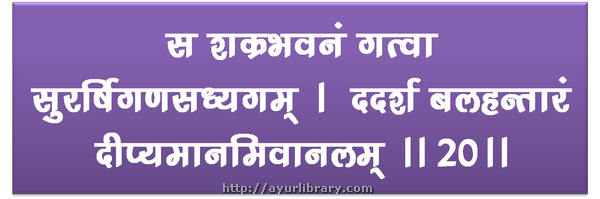
"Sa śakrabhavanaṃ gatvā surarṣigaṇsadhyagam | dadarśa balahantāraṃ dīpyamānamivānalam || 20||"
Bhardwaja approached Indra and found the destroyer of Bala Demon, among divine Sages and Gods, and radiant as sacred fire.
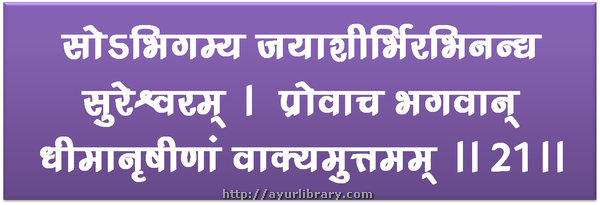
"Sobhigamya jayāśīrbhirabhinandha sureśvaram | provāca bhagavān dhīmānṛṣīṇāṃ vākyamuttamam || 21||"
Bhardwaja went near Indra, greeted the King of Gods with blessings and praise. Then, Bhardwaja, the talented one, reiterated the decision of Sages intelligibly.
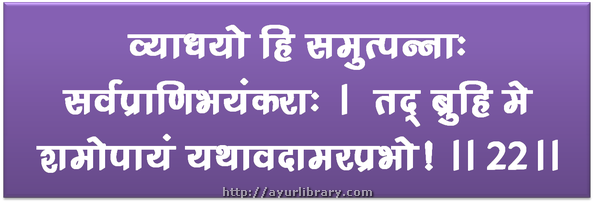
"Vyādhayo hi samutpannāḥ sarvaprāṇibhayaṃkarāḥ | tad bruhi me śamopāyaṃ yathavadāmaraprabho! || 22||"
Mankind and other creatures are affected by terrible disorders. O God! Guide me about the appropriate measures to overcome them.
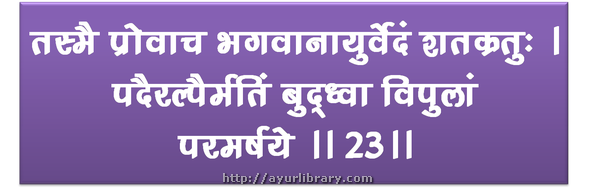
"Tasmai provāca bhagavānāyurvedaṃ śatkratuḥ padairalpairmatiṃ bhuddhvā vipulāṃ paramarṣaye || 23||"
Hearing this and finding Bhardwaj having profound intelligence, Indra intuitively transferred Ayurveda to great Sage using with less words.
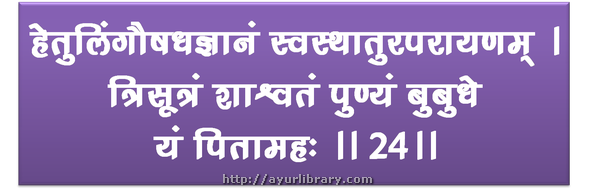
"Hetuliṃgauṣadhjῆānaṃ svasthāturaparāyaṇam | trisutraṃ śāśvat puṇyaṃ bubudhe yaṃ pitāmaḥ || 24||"
The wisdom of Ayurveda is…
- Based upon the knowledge of Causes, Symptoms and Management
- Meant for wellbeing of healthy and sick persons
- Having 3 Threads (3 Doshas, 3 Attributes etc.)
- Eternal or inherently present within nature
- Significant for Life
- As naturally and holistically woven into the threads of world or nature or universe by Brahma, The Creator
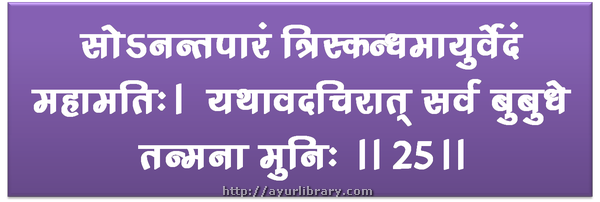
"So'nantapāraṃ triskandhamāyurvedaṃ mahāmatiḥ| yathāvadacirāt sarva bubudhe tanmanā muniḥ || 25||"
Bhardwaja, the profoundly intelligent, realized and gained mastery of three-part, holistic, natural, universal and expansive wisdom of Ayurveda within short duration.


Just Added: Highlight a brand new feature of your membership area here
[/text_block]
Chapter One Overview
The initial part of First Chapter begins with prayers and introduces the Divine Lineage of the wisdom of Ayurveda.
This describes how ancient sages noticed the increasing tendency of attracting disorders in common people and then held a symposium in Himalayan region and decided to bring Ayurveda wisdom for the masses.
This section can be further divided into these subsections…
- General Introduction of Chapter
- The Divine Lineage of Ayurveda
- The Himalayan Summit of Pious Sages
- Their Deciding to Send Sage Bhardwaj to Indra
- Sage Bhardwaj going to Indra and receiving Ayurveda
- Basic Nature of Ayurveda
- Significance and Benefit Received by Other Sages from Ayurveda Wisdom
Second section deals with one of the most important topics in entire Ayurveda – Fundamental Principles of Ayurveda. This is truly the foundation for learning Ayurveda.
The part introduces the framework that supports all the concepts and later practices of Ayurveda in a cohesive and integral manner. This is like the invisible thread inside the chain of pearls.
- Definition of Ayurveda
- Defining Life
- Fundamental Principles – The Six Substances – Matter, Attributes, Activity, Generality, Differentiation, Inherent Nature
- Three Doshas – Vata, Pitta and Kapha
- Three Primary Attributes – Satva, Rajas, Tamas
Tab Content
Tab Content
Tab Content
Premium Members
Dirghajivitiyam Adhyayam Chapter of Desiring Longevity
Desiring Longevity is the most appropriate begining of Charaka Samhita. Before writing more about it, I want you to have a taste of this.

Tab Content
Reader’ Lounge

“Carak Sa?hita Sutrasthanam Prathamodadhyaya?”
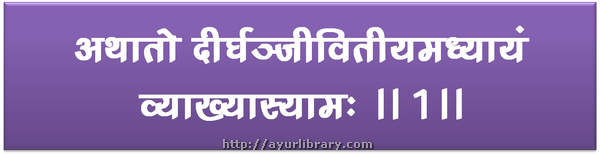
” Athāto dīrghaῆjīvitīyamadhyāyaṃ vyākhyāsyāmaḥ || 1||”

” Iti ha smāha bhagavānātreyaḥ || 2||”
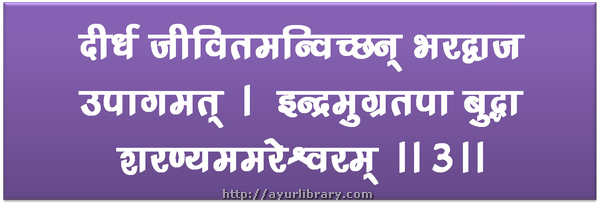
“Dīrdha jīvitamanivacchan bhardvāja upāgamat | Indramugratapā bhuddhā śaraṇyamamareśvaram || 3||”
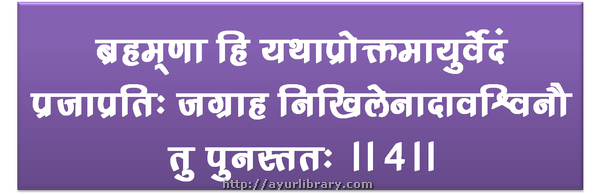
“Bhrahamṇā hi yathāproktamāyurvedaṃ prajāpratiḥ jagrāha nikhilenādāvaśvinau tu punastataḥ || 4||”
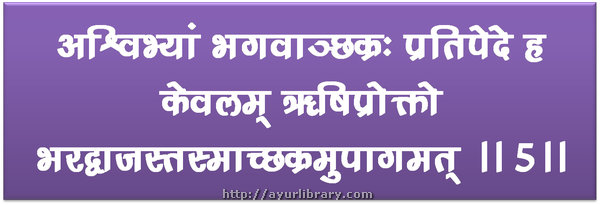
“Aśvabhyāṃ bhagavāῆchakraḥ pratipede ha kevalam ṛṣiprokto bharadvājastasmācchakramupāgamat || 5||”
“Vighnabhūtā yadā rogāḥprādurbhutāḥśarīriṇām | Tapopavāsādhyayanabrahamcarya vratāyuṣām || 6||”
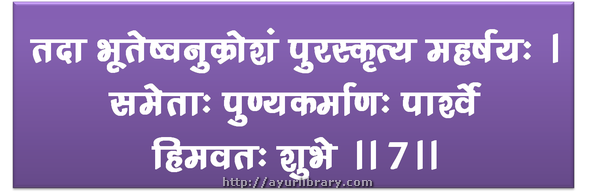
“Tada bhūteṣvanukrośaṃ puraskṛtya maharṣayaḥ | sametāḥ puṇyakarmāṇaḥ pāśrve himavataḥ śubhe || 7|| “
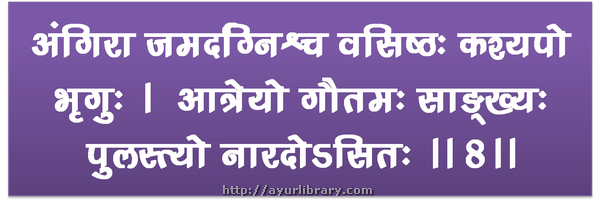
“Aṃgirā jamadagniśca vasiṣṭhaḥ kaśyapo bhṛguḥ | ātreyo gautamaḥ sāṅkhyaḥ pulastyo nāradositaḥ || 8||”
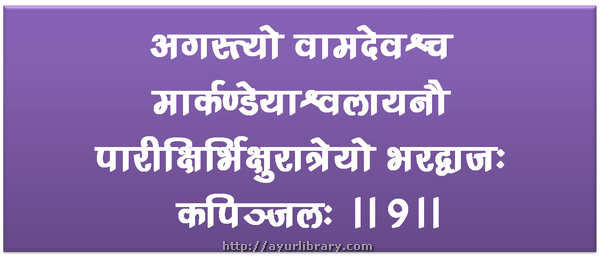
“Agastyo vāmadevaśca mārkaṇṅeyāśvalāyanau pārīkṣirbhikṣurātreyo bharadvājaḥ kapiῆjalaḥ || 9||”
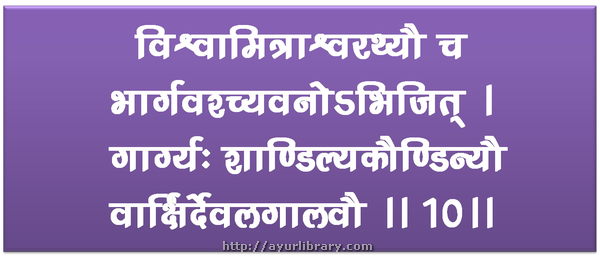
“Viśvāmitrāśvarathyau ca bhārgavaścyavanobhijit | gāgryaḥ śāṇḍilyakauṇḍinyau vārkṣirdevalagālavau || 10||”
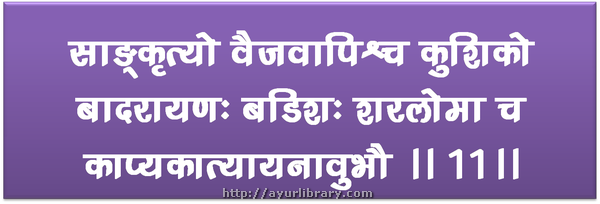
“Sāṅkṛtyo vaujavāpiśca kuśiko bādarāyaṇaḥ baḍiśaḥ śaralomā ca kāpyakātyāyanāvubhau || 11||”
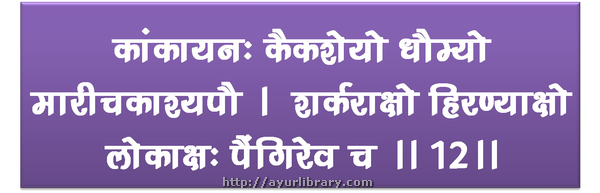
“kāṃkāyanaḥ kaukaśeyo dhaumyo mārīcakāśyapau | śarkarākṣo hiraṇyākṣo lokākṣaḥ paiṃgireva ca || 12||”
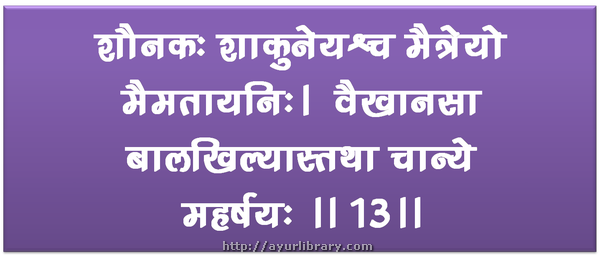
“Śaunakaḥ śākuneyaśca maitreyo maimatāyaniḥ | vaikhānasā bālkhilyāstathā chānye maharṣayaḥ || 13||”
“Brahamjῆānasya nidhayo damasya niyamasya ca | tapasastejasā diṃptā hūyamānā ivāgnayaḥ || 14||”
“Sukhopaviṣṭāste tatra puṇyāṃ cakruḥ kathāmimām | dharmarthakāmamokṣāṇāmārogyaṃ mūlamūttamam ||15||”
“Rogāstasyāpahartaraḥ śreyaso jīvitasya ca | prādurbhūto manuṣyāṇāmantarāyo mahānayam || 16||”
“Kaḥ syātteṣāṃ śamopāya ityuktvā dhyānamāsthitāḥ | atha te śaraṇa śakraṃ dadṛśudhryanacakṣuṣā || 17||”
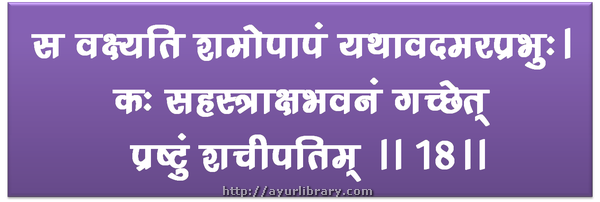
“Sa vakṣyati śamopāpaṃ yathāvadamaraprabhuḥ | kaḥ sahastrākṣabhavanaṃ gacchet praṣṭuṃ śacīpatim || 18||”
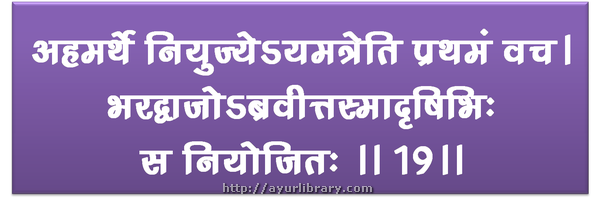
“Ahamarthe niyujyeyamatreti prathamaṃ vacaḥ | bharadvājobravīttasmādṛṣibhiḥ sa niyojitaḥ || 19||”
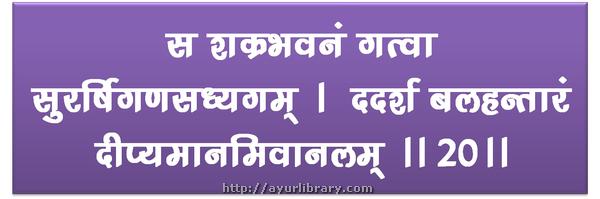
“Sa śakrabhavanaṃ gatvā surarṣigaṇsadhyagam | dadarśa balahantāraṃ dīpyamānamivānalam || 20||”
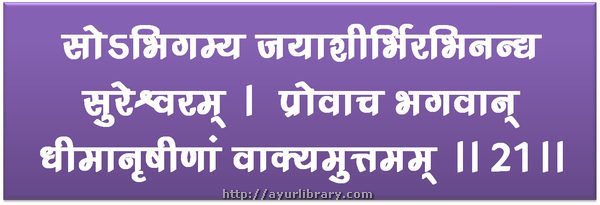
“Sobhigamya jayāśīrbhirabhinandha sureśvaram | provāca bhagavān dhīmānṛṣīṇāṃ vākyamuttamam || 21||”
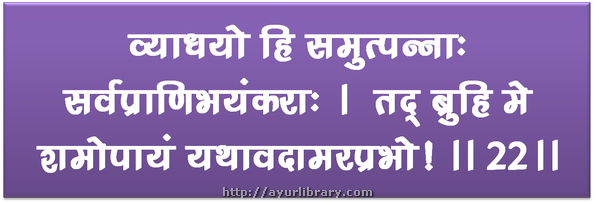
“Vyādhayo hi samutpannāḥ sarvaprāṇibhayaṃkarāḥ | tad bruhi me śamopāyaṃ yathavadāmaraprabho! || 22||”
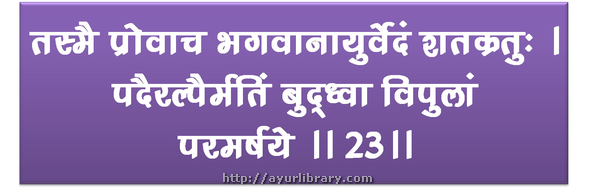
“Tasmai provāca bhagavānāyurvedaṃ śatkratuḥ padairalpairmatiṃ bhuddhvā vipulāṃ paramarṣaye || 23||”
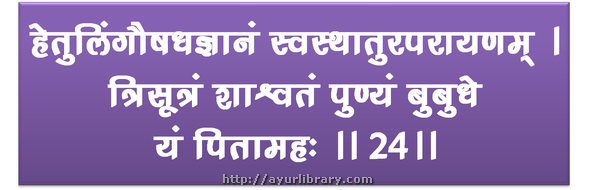
“Hetuliṃgauṣadhjῆānaṃ svasthāturaparāyaṇam | trisutraṃ śāśvat puṇyaṃ bubudhe yaṃ pitāmaḥ || 24||”
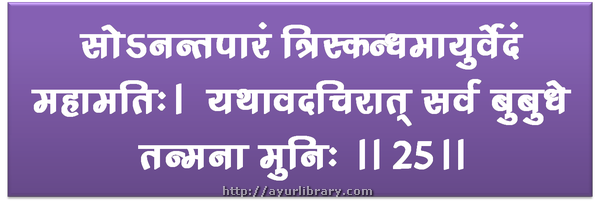
“Sonantapāraṃ triskandhamāyurvedaṃ mahāmatiḥ| yathāvadacirāt sarva bubudhe tanmanā muniḥ || 25||”
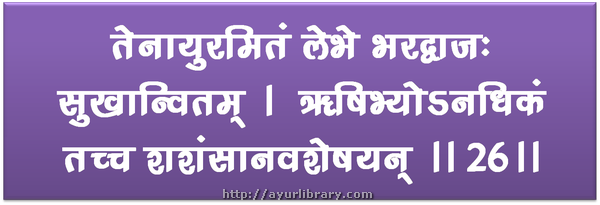
“Tenāyuramitaṃ lebhe bharadvājaḥ sukhānvitam| ṛṣibhyonadhikaṃ tacca śaśaṃsānavaśeṣayan || 26||”
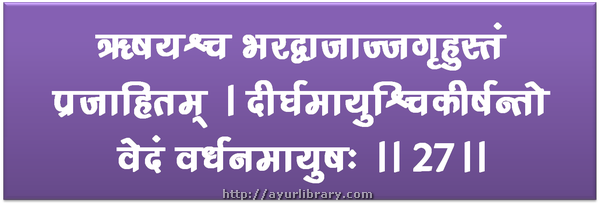
“ṛṣayaśca bharadvājājjagṛhustaṃ prajāhitam | dīrghamāyuścakīrṣanto vedaṃ vardhanamāyuṣaḥ || 27||”
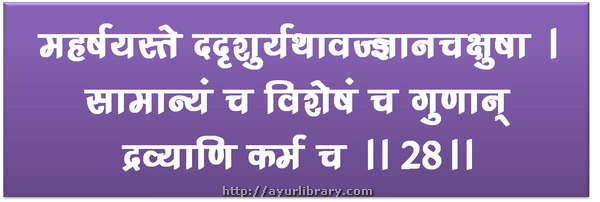
“Maharṣayaste dadṛśuryathvajjῆānacakṣuṣā | sāmānyaṃ ca viśeṣaṃ ca guṇān dravyāṇi karma ca || 28||”
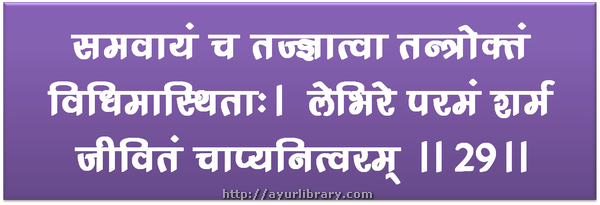
“Samavāyaṃ ca tajjῆātvā tantroktaṃ vidhimāsthitāḥ | lebhire paramaṃ śarma jīvitaṃ cāpyanitvaram || 29||”
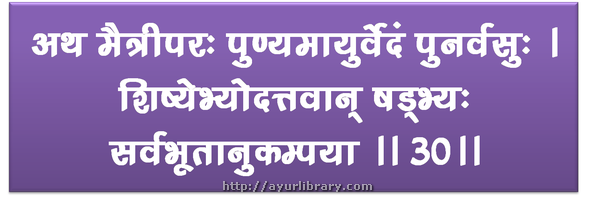
“Atha maitrīparaḥ puṇyamāyurvedaṃ punarvasuḥ | śiṣyebhayodattvān ṣaṅbhyaḥ sarvabhūtānukampayā || 30||”
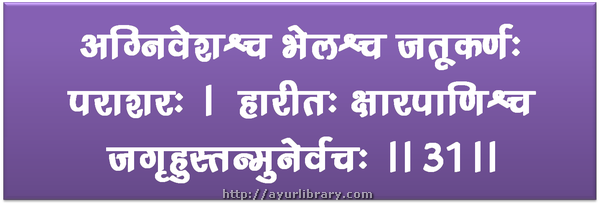
“Agniveśaśca bhelaśca jutūkarṇaḥ parāśaraḥ | hārītaḥ kṣārapāṇiśca jagṛahustanmunervacaḥ || 31||”
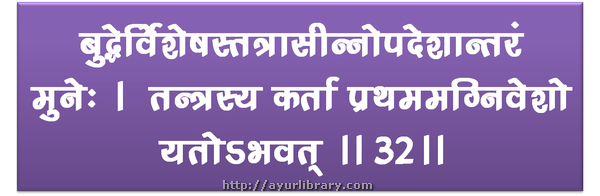
“Buddherviśeṣastatrāsīnnopadeśāntaraṃ muneḥ | tantrasya kartā prathamamagniveśo yatobhavat || 32|| |”
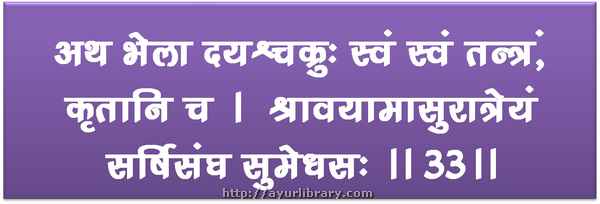
“Atha bhelā dayaścakruḥ savaṃ savaṃ tantraṃ, kṛtāni ca | śrāvayāmāsurātreyaṃ sarśisaṃgha sumedhasaḥ || 33||”
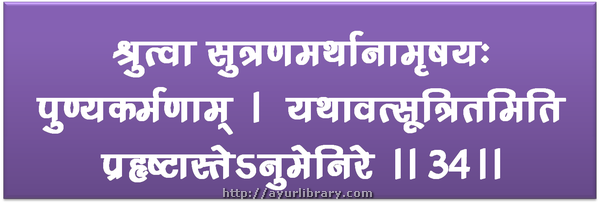
“Śrutvā sutraṇamarthānāmṛṣayaḥ puṇyakarmaṇām | yathāvatsūtritamiti prarhṛaṣṭāstenumenire || 34||”
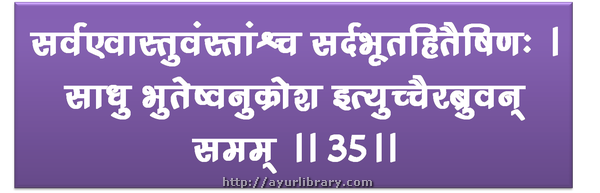
“Sarvaevāstuvaṃsatāṃśca sardabhūtahitaiṣiṇāḥ | sādhu bhuteṣvanukrośa ityuccairabrurvan samam || 35||”
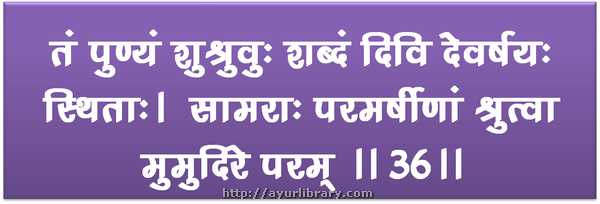
“Taṃ puṇyaṃ śuśruvuḥ śabdaṃ divi devarṣayaḥ sthitāḥ | sāmārāḥ paramarṣīṇāṃ śrutvā mumudire param || 36||”
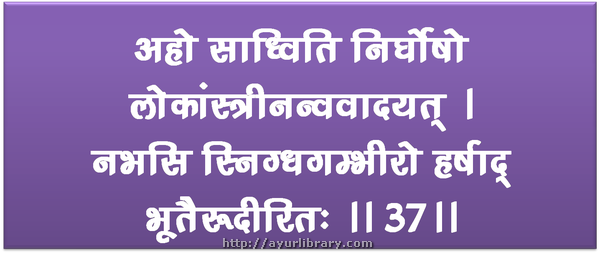
“Aho sādhviti nirghośo lokāṃstrīnanvavādayat | nabhasi snigdhagambhīro harṣad bhūtairūdīritaḥ || 37||”
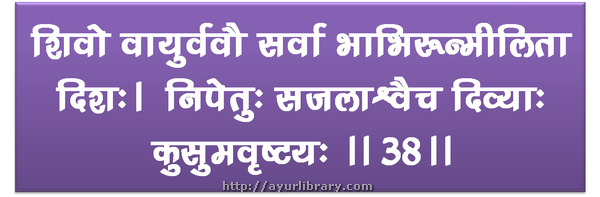
“śivo vāyurvavau sarvā bhābhirūnmīlitā diśaḥ | nipetuḥ sajalāśvaica divyāḥ kusumavṛaṣṭyaḥ || 38||”
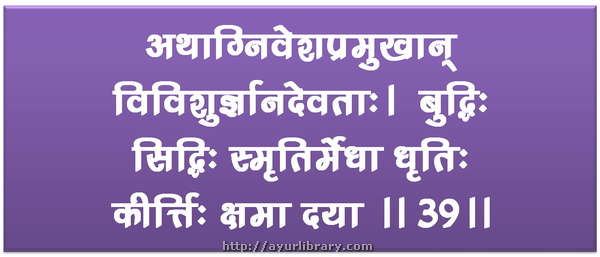
“Athāgniveśapramukhān viviśurjῆanadevatāḥ | budhiḥ siddhiḥ smṛtirmedhā dhṛtiḥ kīrttiḥ kṣamā dayā || 39||”
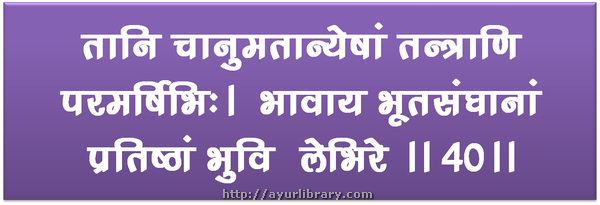
“Tāni cānumatānyeṣāḥ tantrāṇi paramarṣibhiḥ | bhāvāya bhūtasaṃghānāḥ pratiṣṭhā bhuvi lebhire || 40||”
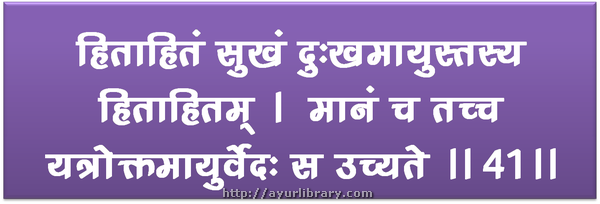
“Hitāhitaṃ sukhaṃ duḥkhamāyustasya hitāhitam| mānaṃ ca tacca yatroktamāyurvedaḥ sa ucyate || 41||”
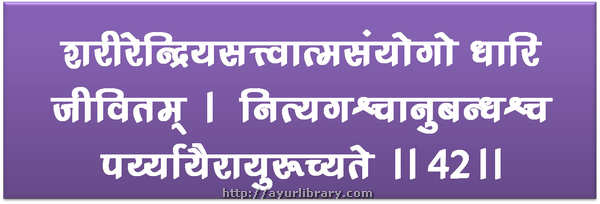
“Śarīrendriyasattvātmasaṃyogo dhāri jīvitam | nityagaścānubandhaśca payryayairāyurūcyate || 42||”
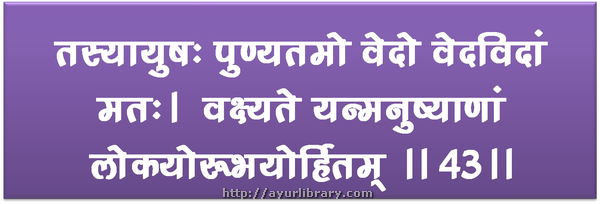
“Tasyāyuṣaḥ puṇyatamo vedo vedavidāṃ mataḥ | vakṣyate yanmanuṣyāṇāṃ lokayorūbhayorhitam || 43||”
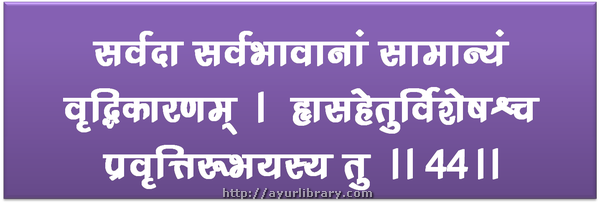
“Sarvadā sarvabhāvānāṃ sāmānyaḥ vṛddhikāraṇam | hṛāsaheturviśeṣaśca pravṛattirūbhayasya tu || 44||”
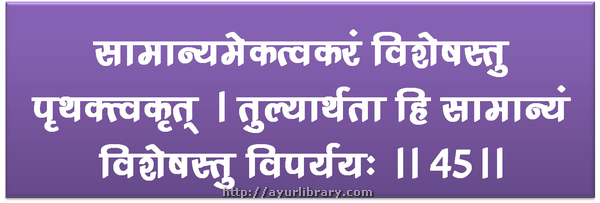
“Sāmānymekatvakaraṃ viśeṣastu pṛthaktvakṛt | tulyārthatā hi sāmānyaṃ viśeṣastu viparyayaḥ || 45||”
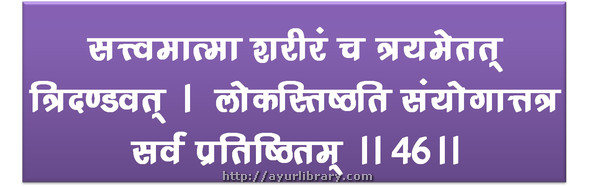
“Sattvamātmā śarīraṃ ca trayametat tridaṇḍavat | lokastiṣṭhati saṃyogāttatra sarva pratiṣṭhitam || 46||”
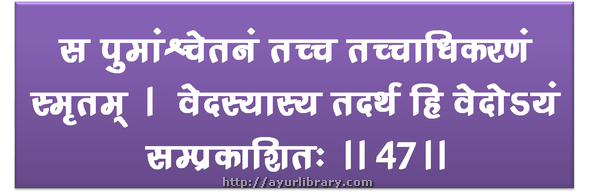
“Sa pumāṃścetanaṃ tacca taccādikaraṇaṃ samṛtam | vedasyāsya tadartha hi vedoyaṃ samprakāśitaḥ || 47||”
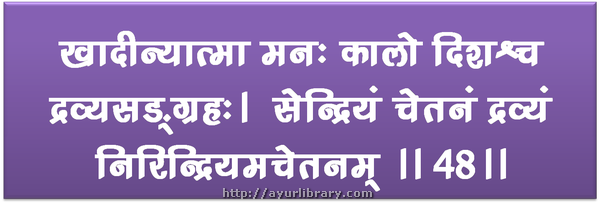
“Khādinyātmā manaḥ kālo diśaśca dravyasaṅgrahaḥ | sendriyaṃ cetanaṃ dravyaṃ nirindriyamacetanam || 48||”
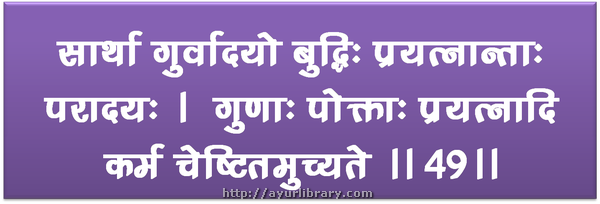
“Sārthā gurvādyo buddhiḥ prayatnāntāḥ parādayaḥ | guṇāḥ proktāḥ prayatnādi karma ceṣṭitamucyate || 49||”
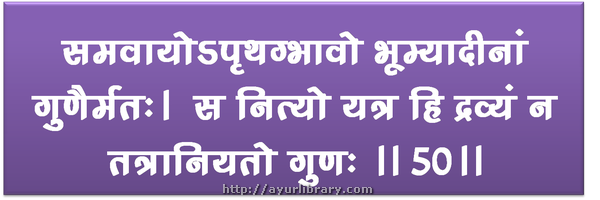
“Samavāyopṛathagbhāvo bhūmyādīnāṃ guṇairmataḥ | sa nityo yatra hi dravyaṃ na tatrāniyato guṇaḥ || 50||”
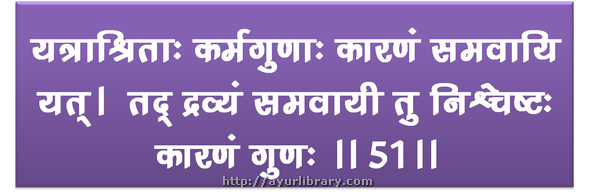
“Yatrāśritāḥ karmaguṇāḥ kāraṇaṃ samavāyi yat | tad dravyaṃ samavāyī tu niśceśṭaḥ kāraṇaṃ guṇaḥ || 51||”
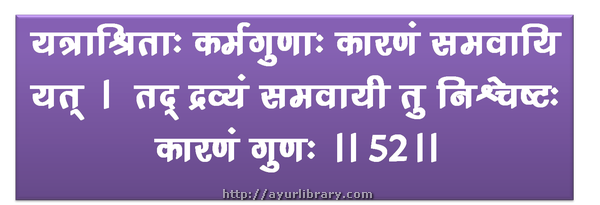
“Saṃyoge ca vibhāge ca kāraṇaṃ dravyamāśritam | kartavyasya kriyā karma karma nānyadapekṣate || 52||”
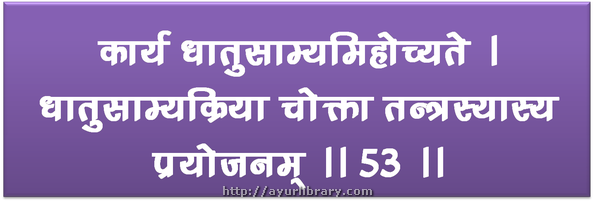
“kārya dhātusāmyamihocyate | dhātusāmyakriyā choktā tantrasyāsya prayojanam || 53||”
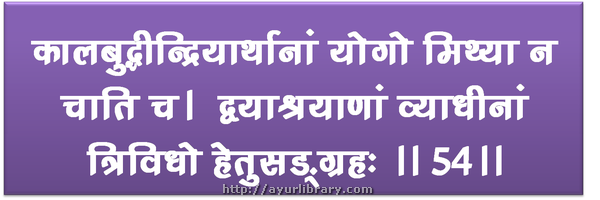
“Kālabuddhīndriyārthanaṃ yogo mithyā na cāti ca | dvayāśrayāṇāṃ vyādhīnāṃ trividho hetusaṅgrahaḥ || 54||”
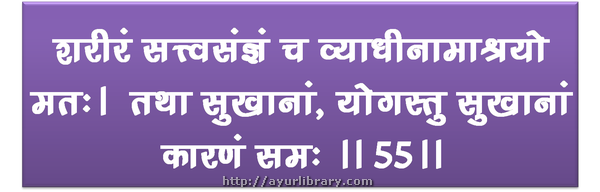
“Śarīraṃ sattvasaṃjῆaṃ ca vyādhīnāmāśrayo mataḥ | thatā sukhānāṃ, yogastu sukhānāṃ kāraṇaṃ samaḥ || 55||”
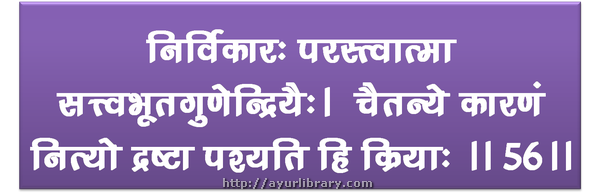
“Nirvikāraḥ parastvātmā sattvabhūtaguṇendriyaiḥ | caitanye kāraṇaḥ nītyo draśṭa paśyati hi kriyāḥ || 56||”
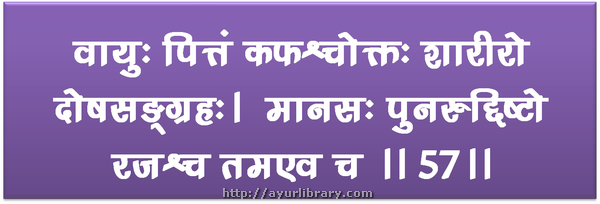
“Vāyuḥ pittaṃ kaphaścoktaḥ śārīro doṣasaṅgrahaḥ | mānasaḥ punaruddiṣṭo rajaśca tamaeva ca || 57||”
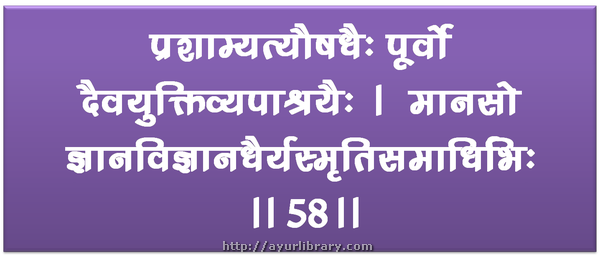
“Praśāmyatyauṣadhauḥ pūrvo daivyuktivyapāśrayaiḥ | mānaso jῆānavijῆānadhairyasmṛtisamādhibhiḥ || 58||”
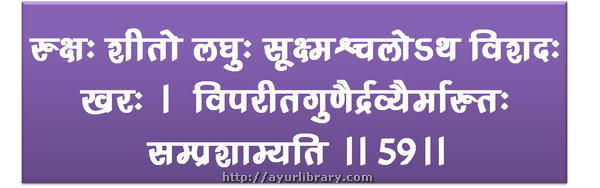
“Rukṣaḥ śīto laghuḥ sūkṣmaścalotha viśadaḥ kharaṃ | viparītaguṇairdravyairmārutaḥ sampraśāmyati || 59||”
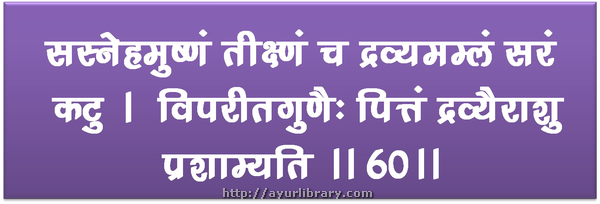
“Sasnehamuṣṇaṃ tīkṣṇaḥ ca dravyamamlaṃ saraṃ katu | viparītaguṇaiḥ pittaṃ praśāmyati || 60||”
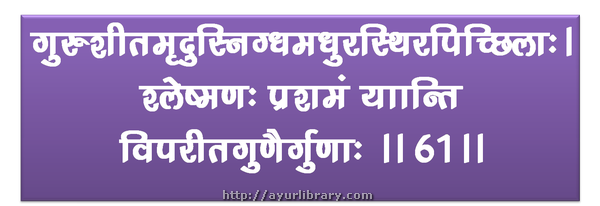
“Guruśītamṛdusnigdhamdhurasthirpicchilāḥ | śleṣmaṇ praśamaṃ yānti viparītaguṇairguṇāḥ || 61||”
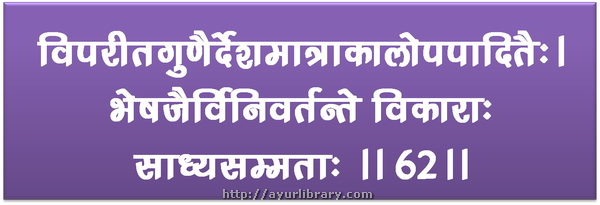
“Viparītaguṇairdeśmātrākālopapāditaiḥ | bheśjairvinivartante vikārāḥ sādhyasammatāḥ ||62||”
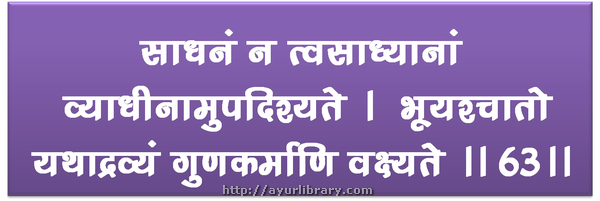
“Sādhanaṃ na tvasādhyānāṃ vyādhīnāmupadiśyate | bhūyaścāto yathādravyaṃ guṇakarmāṇi vakṣyate || 63||”
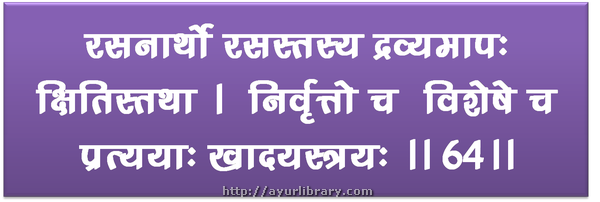
“Rasanārtho rasastasya dravyamāpaḥ kṣitistathā | nirvṛatto ca viśeṣe ca pratyayāḥ khādayastrayaḥ || 64||”
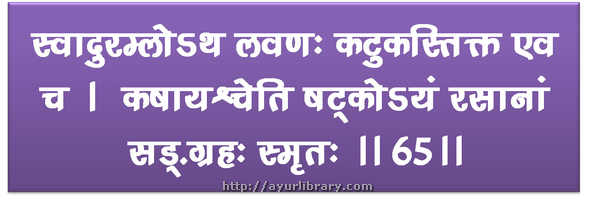
“Svāduramlotha lavaṇaḥ katukastikta eva ca | kaṣāyaśceti ṣaṭkoyaṃ rasānāṃ saṅgrahaḥ smṛtaḥ || 65||”
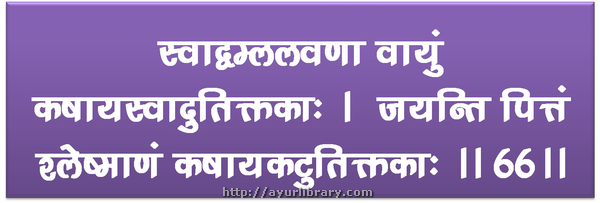
“Svādvamlalavaṇā vāyuṃ kaṣāyasvādutiktakāḥ | jayanti pittaṃ śleṣmāṇāṃ kaṣāyaktutiktakāḥ || 66||”
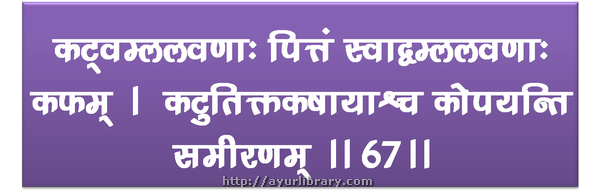
“kaṭvamlalavaṇāḥ pittaṃ Svādvamlalavaṇāḥ kapham | katutiktakaṣāyāśca kopayanti samīraṇam || 67||”
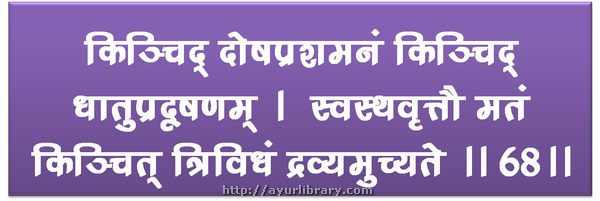
“kijῆcid doṣapraśamanaṃ kijῆcid dhātupraduṣaṇam | svasthavṛttau mataḥ kijῆcit trividhaṃ dravyamucyate || 68||”
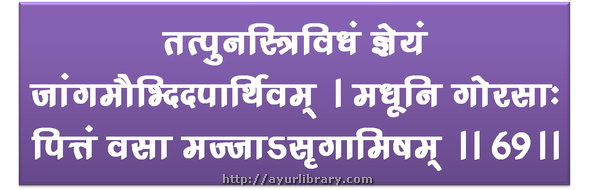
“Tatpunastrividhaṃ jῆeyaṃ jāṃgamaubhdidapārthivam | madhūni gorasāḥ pittaṃ vasā majjāsṛgāmiṣam || 69||”
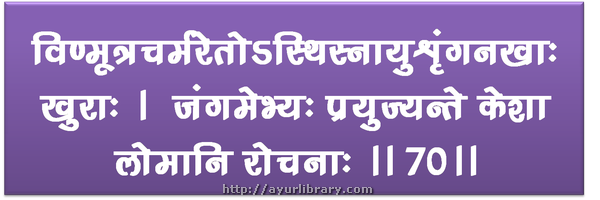
“Viṇmūtracarmaretosthisnāyuśṛaṃganakhāḥ khurāḥ | jaṃgamebhyaḥ prayujyante keśā lomāni rocanāḥ || 70||”
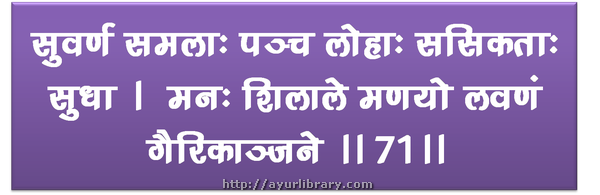
“Suvarṇa samalāḥ paῆca lohāḥ sasikatāḥ sudhā | manaḥ śilāle maṇayo lavaṇaṃ gaurikāῆjane || 71||”
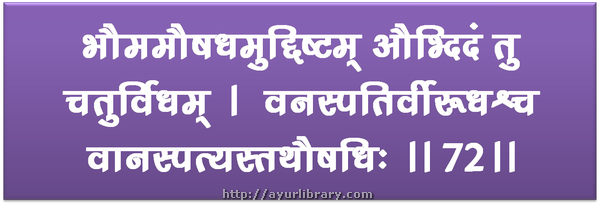
“Bhaumamauṣadhamuddiṣṭam aubhidadaṃ tu caturvidham | vanaspatirvīrūdhaśca vānaspatyastathauṣadhiḥ || 72||”
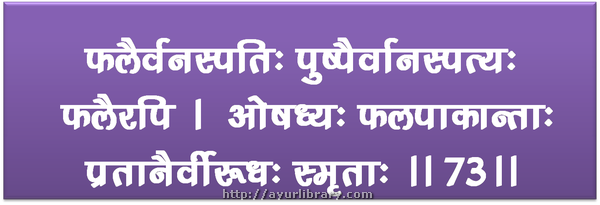
“Phalairvanaspatiḥ puṣpairvānaspatyaḥ phalairapi | oṣadhayaḥ phalapākāntāḥ pratānairvīrudhaḥ smṛatāḥ || 73||”
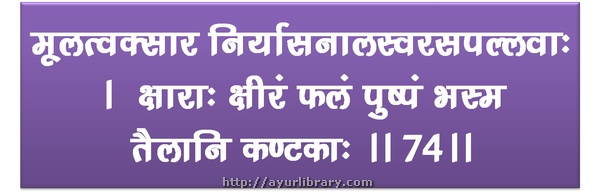
“Mūlatvaksāra niryāsanālasvarasapallavāḥ | kṣārāḥ kṣīraṃ phalaṃ puṣpaṃ bhasma tailāni kaṇṭakāḥ || 74||”
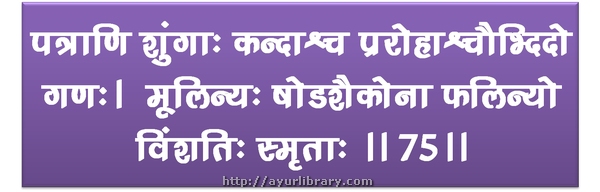
“Patrāṇi śuṃgāḥ kandāśca prarohāścaubhidado gaṇaḥ | mūlinyaḥ ṣoḍaśaikonā phalinyo viṃśatiḥ smṛtāḥ || 75||”
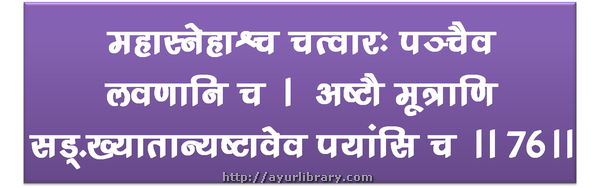
“Mahāsnehāśca catvāraḥ paῆcaiva lavaṇāni ca | aśtau mūtrāṇi saṅkhyātānyaṣṭāveva payāṃsi ca || 76||”
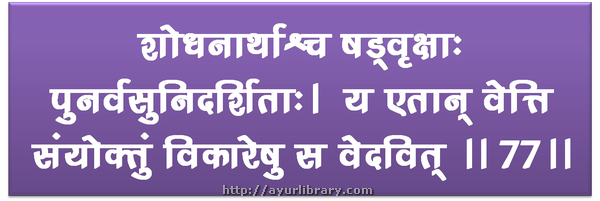
“Sodhanārthaśca ṣaḍvṛkṣāḥ punarvasunidarśitāḥ | ya etān vetti saṃyoktuṃ vikareśu sa vedavit || 77||”
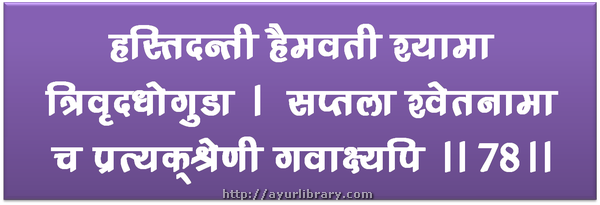
“Hastidantī haimavatī śyāmā trivṛdadhoguḍā | saptalā śvetanāmā ca pratyakśreṇī gavākṣyapi || 78||”
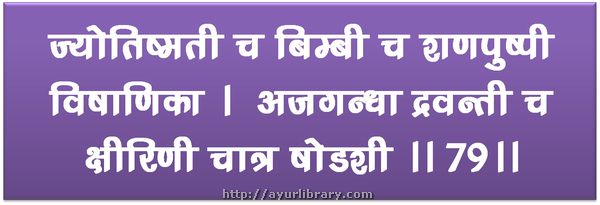
“Jyotiṣmatī ca bimbī ca śaṇapuṣpī viṣāṇikā | ajgandhā dravantī ca kṣīriṇī cātra ṣoḍaśī || 79||”
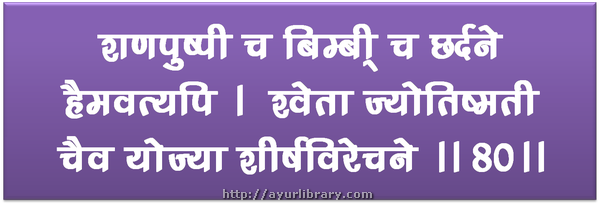
“Śaṇapuṣpī ca bimbī ca chardane haimavatyapi | śvetā jyotiṣmatī caiva yojyā śīrṣavirecane || 80||”
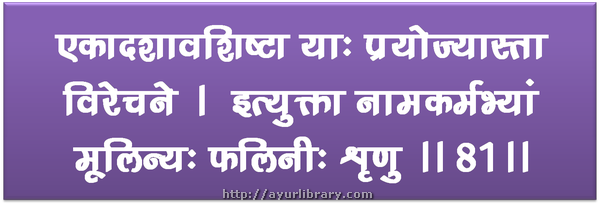
“Ekādaśāvaśiṣṭā yāḥ prayojyāstā virecane | ityuktā nāmakarmabhyāṃ mūlinyaḥ phalinīḥ śṛṇu || 81||”
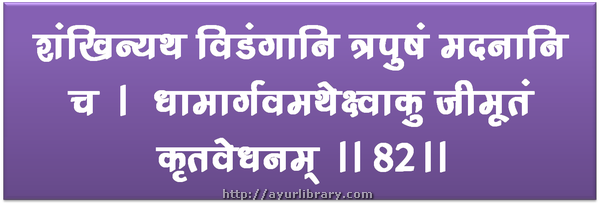
“Śaṃkhinyatha viḍaṃgāni trapuṣaṃ madanāni ca | dhāmārgavamathekṣvāku jīmūtaḥ kṛtavedhanam || 82||”
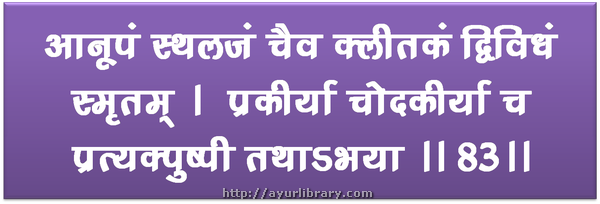
“ānūpaṃ sthalajaṃ caiva klītakaṃ dvividhaṃ samṛtam | prakīryā chodakīryā ca pratyakpuṣpī tathābhayā || 83||”
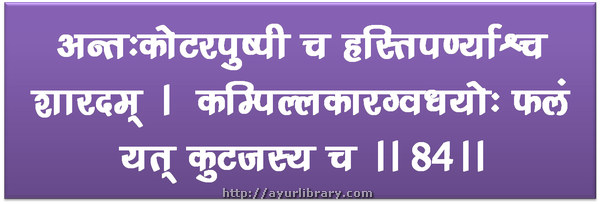
“Anantaḥkoṭarapuṣpī ca hastipaṇryāśca śāradam | kampillakāragvadhayoḥ phalaṃ yat kuṭajasya ca || 84||”
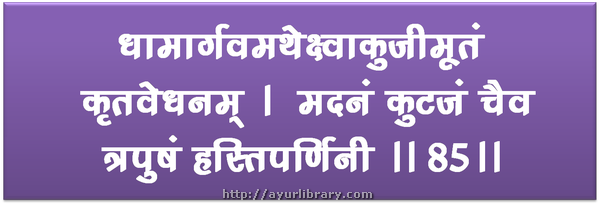
“Dhāmārgavamathekṣvākujīmūtaṃ kṛtavedhanam | madanaṃ kutujaṃ caiva trapuṣaṃ hastiparṇinī || 85||”
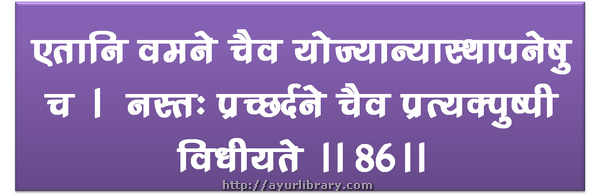
“Etāni vamane caiva yojyānyāsthāpaneṣu ca | nastaḥ pracchardane caiva pratyakpuṣpī vidhīyane || 86||”
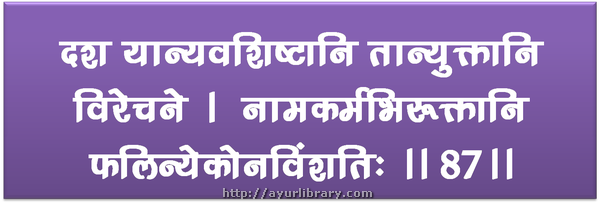
“Daśa yānyavaśiṣṭāni tānyuktāni virecane | nāmakarmabhirūktāni phalinyekonaviṃśatiḥ || 87||”
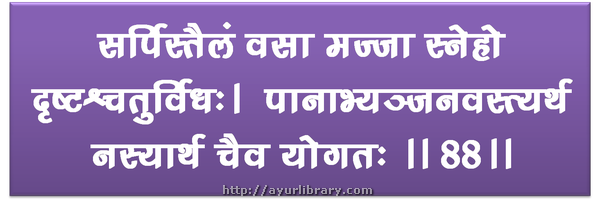
“Sarpistailaṃ vasā majjā sneho dṛṣṭaścaturvidhaḥ | pānābhyaῆjanvastyartha nasyārtha caiva yogataḥ || 88||”
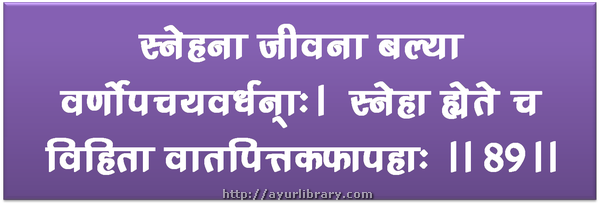
“Snehanā jīvanā balyā varṇopacayavardhanāḥ | snehā hyete ca vihitā vātapittakaphāpahāḥ || 89||”
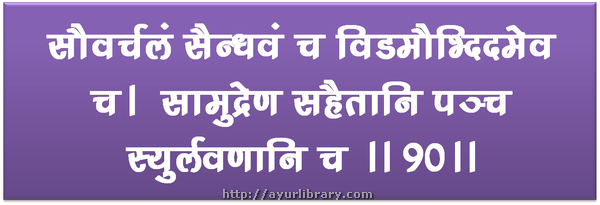
“Saivarcalaṃ saindhavaṃ ca viḍamaubhdidameva ca| sāmudreṇa sahaitāṇi paῆca syurlavaṇāni ca || 90||”
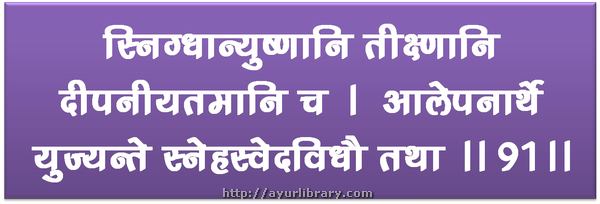
“Snigdhānyuṣṇāni tīkṣṇāni dīpanīyatamāni ca | ālepanārthe yujyante snehasvedavidhau tathā || 91||”
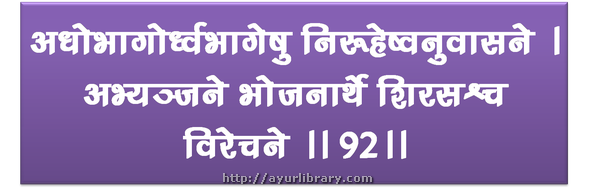
“Adhobhāgordhvabhāgeśu nirūheṣvanuvāsane | abhyaῆjane bhojanārthe śirasaśca virecane || 92||”
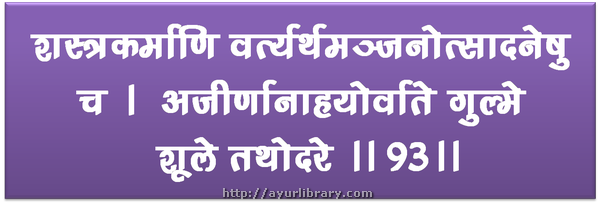
“Śastrakarmāṇi vartyarthamaῆjanotsādaneśu ca | ajīrṇānāhayorvāte gulme śūle tathodare || 93||”
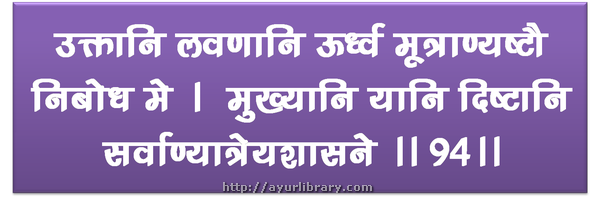
“Uktāni lavaṇāni ūrdhva mūtrāṇyaṣṭau nibodha me | mukhyāni yāni diṣṭāni sarvāṇyātreyaśāsane || 94||”
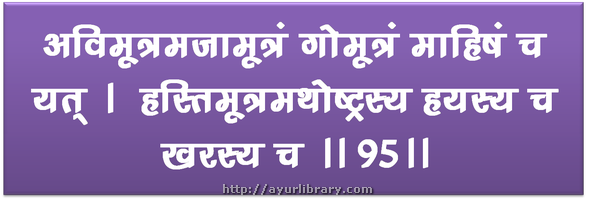
“Avimūtramajāmūtraṃ gomūtraṃ māhiśaḥ ca yat | hastimūtramathoṣṭraosya hayasya ca kharasya ca || 95||”
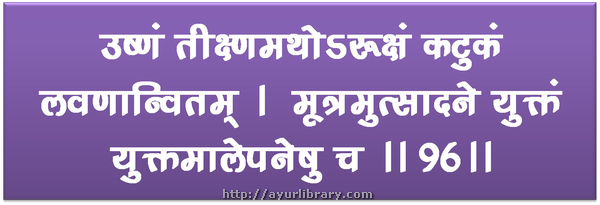
“Uṣṇaṃ tīkṣṇamthorūkṣaṃ katukaṃ lavaṇānvitam | mūtramutsādane yuktaṃ yuktamālepaneṣu ca || 96||”
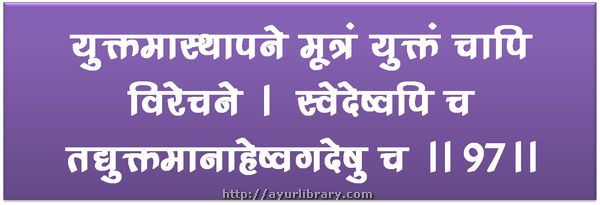
“Yuktamāsthāpane mūtraṃ yuktaṃ cāpi virecane | svedeṣvapi ca tadhuktamānāheṣvagadeṣu ca || 97||”
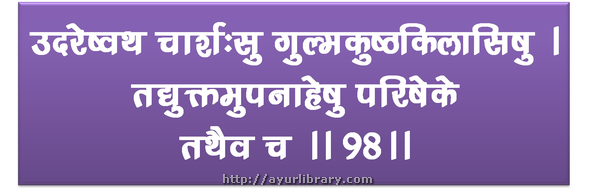
“Udareṣvatha cārśaḥsu gulmakuṣṭhakilāsiṣu| tadhuktamupanāheṣu pariśeke tathiva ca || 98||”
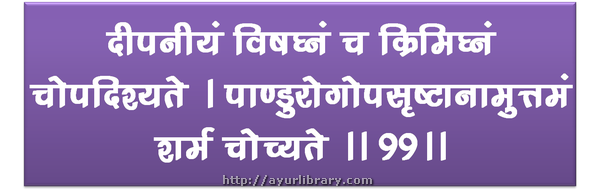
“Dīpanīyaṃ viṣaghnaṃ ca krimighnaṃ copadiśyate | pāṇḍurogopasṛṣṭānāmuttamaḥ śarma cocyate || 99||”
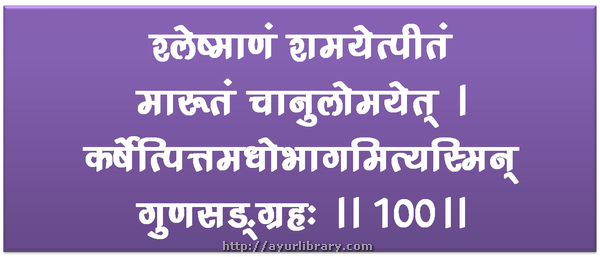
“Śleṣmāṇaḥ śamayetpītaṃ mārutaṃ cānulomayet | karṣetpittamadhobhāgamityasmin guṇasaḍṅgrahaḥ || 100||”
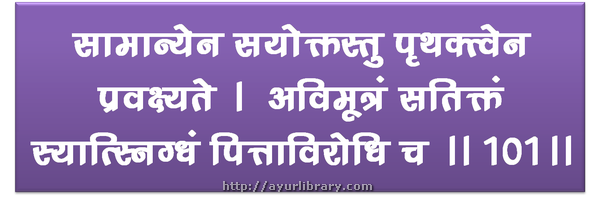
“Sāmānyena sayoktastu pṛthaktvena pravakṣyati | avimūtraṃ satiktaṃ sayātsnigdhaṃ pittāvirodhi ca || 101||”
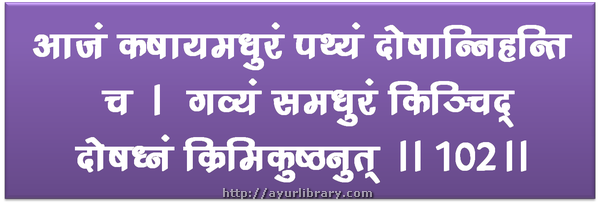
“ājaṃ kaṣāyamadhuraṃ pathyaṃ doṣānnihanti ca | gavyaṃ samadhuraṃ kiῆcid doṣadhnaṃ krimikuṣṭhanut || 102||”
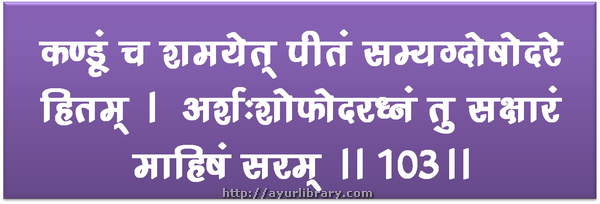
“kaṇḍūṃ ca śamayet pītaṃ samyagdoṣodare hitam | arśaḥśophodaradhnaṃ tu sakṣāraṃ māhiṣaṃ saram || 103||”
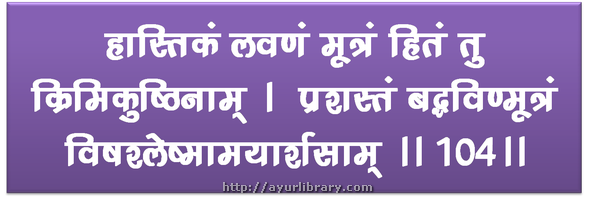
“Hāstikaṃ lavaṇaṃ mūtraṃ hitaṃ tu krimikuṣṭhinām | praśastaṃ baddhaviṇmutraṃ viṣaśleṣmāmayārśasām || 104||”
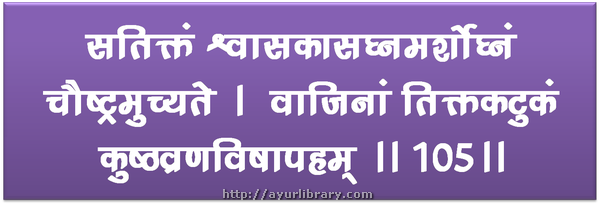
“Satiktaṃ śvāsakāsaghnamarśoghnaṃ cauṣṭramucyati | vājinā tiktakatukaṃ kuṣṭhavraṇaviṣāpaham || 105||”
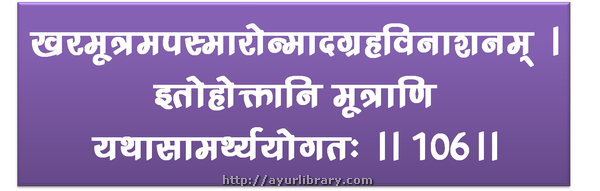
“Kharamūtramapasmāronmādagrahavināśanam | itohoktāni mūtrāni yathāsāmarthyayogataḥ || 106||”
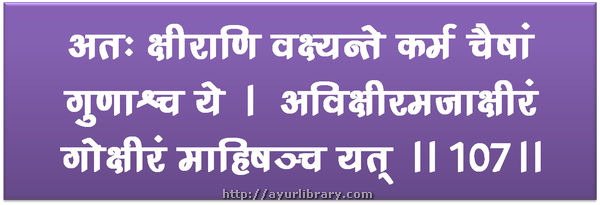
“Ataḥ kṣīrāṇi vakṣyante karma caiṣāṃ guṇāśca ye | avikṣiramajākṣīraṃ gokṣīraṃ māhiṣaῆca yat || 107||”
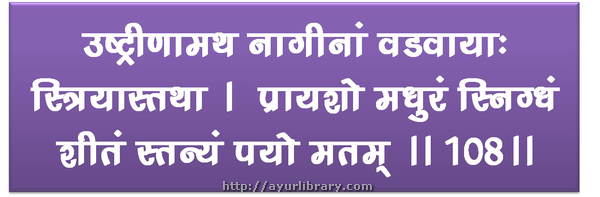
“Uṣṭrīṇāmatha nāgīnāṃ vadavāyāḥ striyāstathā | prayaśo madhuraḥ snigandhaṃ śitaṃ stanyaṃ payo mataṃ || 108||”
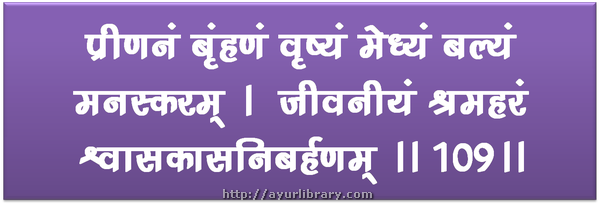
“Priṇanaḥ bṛaṃhaṇaṃ vraṣyaṃ medhyaṃ balyaṃ manaskaram | jīvanīyaṃ śramharaḥ śrvāsakāsanibarhaṇam || 109||”
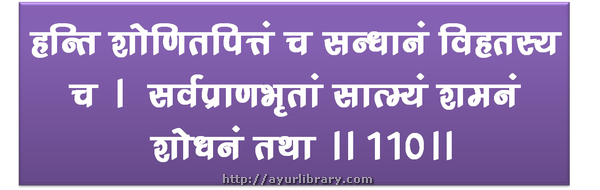
“Hanti śoṇitapittaṃ ca sandhānaṃ vihatasya ca | sarvaprāṇabhṛataṃ sātmyaṃ śamanaṃ sodhanaṃ tathā || 110||”
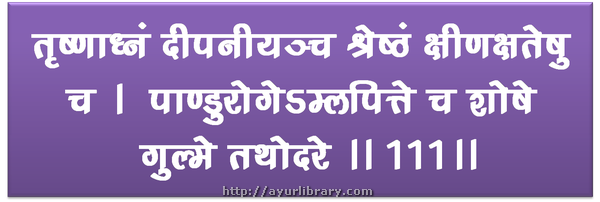
“Tṛṣṇādhnaṃ dīpanīyaῆca śreṣṭha kṣīṇakṣateṣu ca | pāṇḍurogemlapitte ca śoṣe gulme tathodare || 111||”
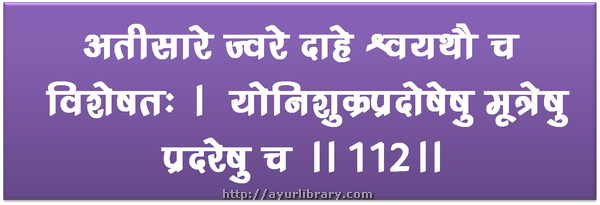
“Atīsāre jvare dāhe śvayathau ca viśeṣataḥ | yoniśukrapradoṣeṣu mūtreṣu pradareṣu ca || 112||”
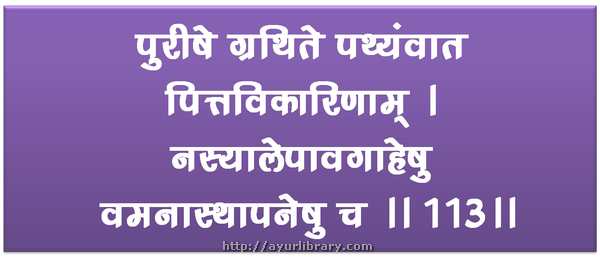
“Purīṣe grathite pathyaṃ vātapittavikāriṇām | nasyālepāvagāheṣu vamanāsthāpaneṣu ca || 113||”
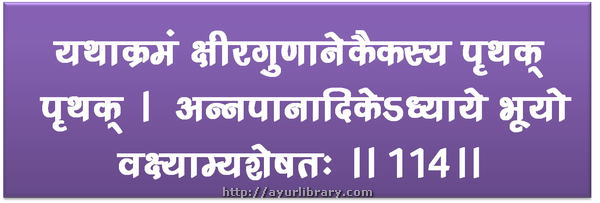
“Yathākramaḥ kṣīraguṇānekaikasya pṛthak pṛthak | annapānādikedhyāye bhūyo vakṣyāmyaśeṣataḥ || 114||”
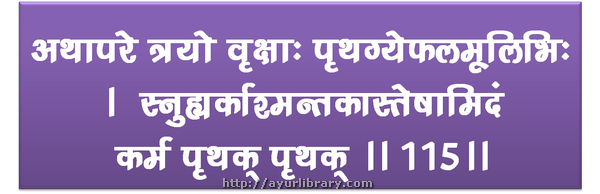
“Athāpare trayo vṛkṣāḥ pṛthagye phalamūlibhiḥ | snuhyarkāśmantakāsteṣāmidaṃ karma pṛthak pṛathak || 115||”
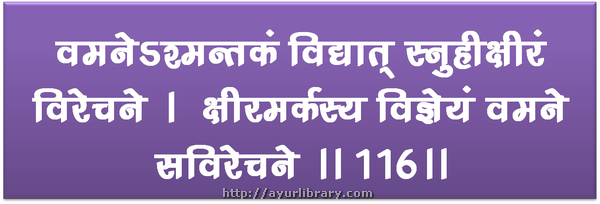
“Vamaneśmantakaṃ vidhāt snuhīkṣīraṃ virecane | kṣīramarkasya vijῆeyaṃ vamane savirecane || 116||”
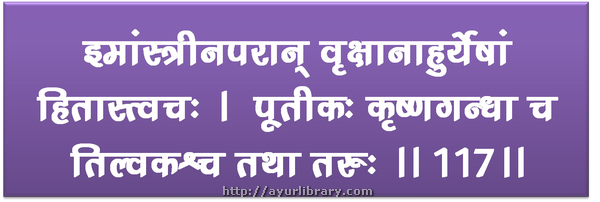
“Imāṃstrīnaparān vṛkṣānāhuryeṣāṃ hitāstvacaḥ | pūtikaḥ kṛṣṇagandhā ca tilvakaśca tathā taruḥ || 117 ||”
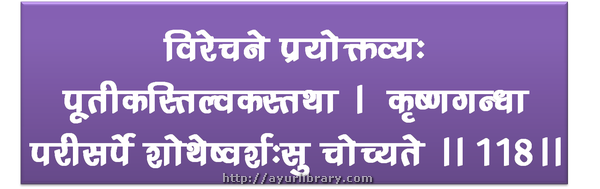
“Virecane prayoktavyaḥ pūtīkastilvakastathā | kṛṣṇagandhā parīsarpe śotheśvarśaḥsu cocyate || 118||”
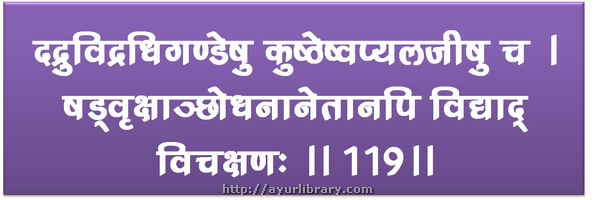
“Dadruvidradhigaṇḍeṣu kuśṭheṣvapyalajīṣu ca | paḍvṛkṣāῆchodhanānetānapi vidhād vicakṣaṇaḥ || 119||”
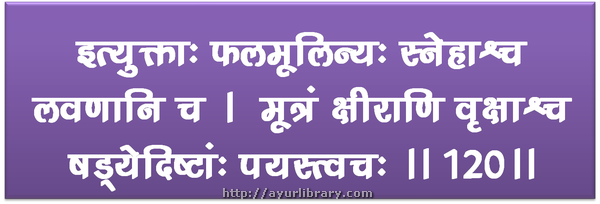
“Ityuktaḥ phalamūlinyaḥ snehāśca lavaṇāni ca | mūtraṃ kṣīrāṇi vṛkṣāśca ṣḍyediṣṭāḥ payastvacaḥ || 120||”
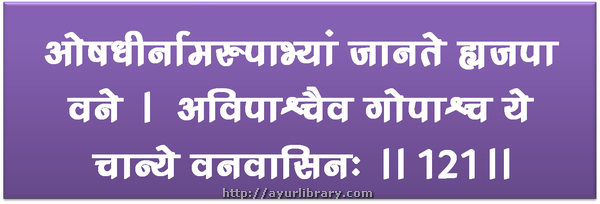
“Oṣadhīrnāmarupābhyāṃ jānate hyajapā vane | avipāścaiva gopāśca ye cānye vanavāsinaḥ || 121||”
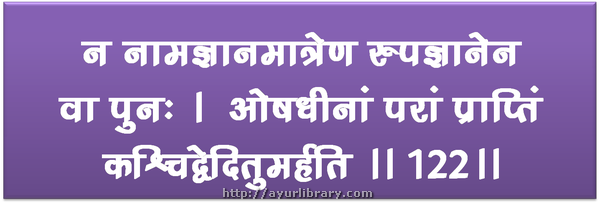
“Na nāmajῆānamātreṇa rupajῆānen vā punaḥ | oṣadhināṃ parāṃ prāptiṃ kaścidveditumarhati || 122||”
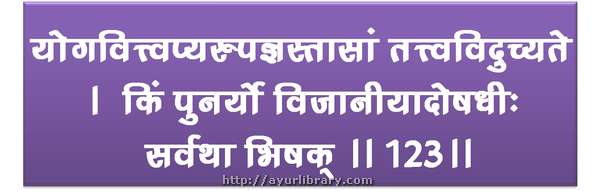
“Yogavittvapyarupajῆastāsāṃ tattvaviducyate | kiṃ punaryo vijānīyādoṣadhiḥ sarvathā bhiṣak || 123||”
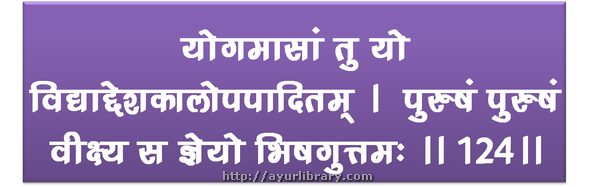
“Yogamāsāṃ tu yo vidhāddeśakālopapāditam | puruṣaṃ puruṣaṃ vīkṣya sa jῆeyo bhiṣaguttamaḥ || 124||”
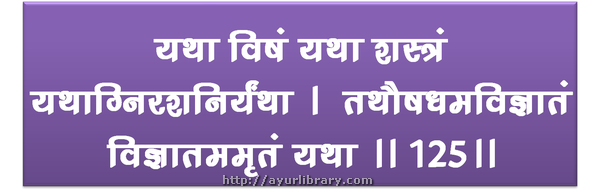
“Yatha viṣaṃ śastraṃ yathāgniraśaniryaṃthā | tathauṣadhamavijῆātaṃ vijῆātamamṛtaṃ yathā || 125||”
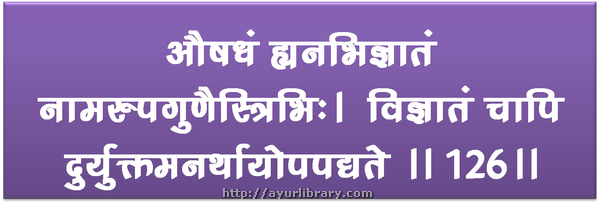
“Oṣadhaṃ hyanabhijῆātaṃ nāmarupaguṇaistribhiḥ | vijῆātaṃ cāpi duryuktamanarthayopapaghate || 126||”
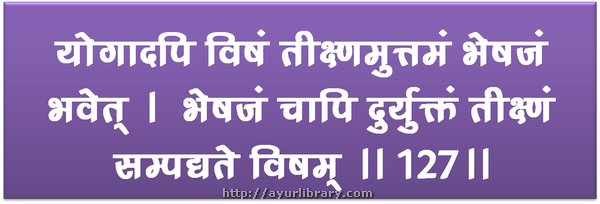
“Yogadapi viṣaṃ vīkṣaṇmuttamaṃ bheṣajaṃ bhavet | bheṣajaṃ cāpi duryuktaṃ tīkṣṇaṃ sampaghate viṣam || 127||”
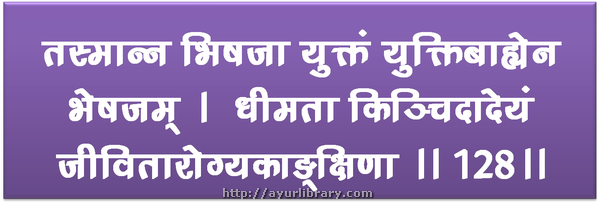
“Tasmānna bhiṣajā yuktaṃ yuktibāhyen bheṣajam | dhimatā kiῆcidādeyaṃ jīvitārogyakāṅkṣiṇā || 128||”
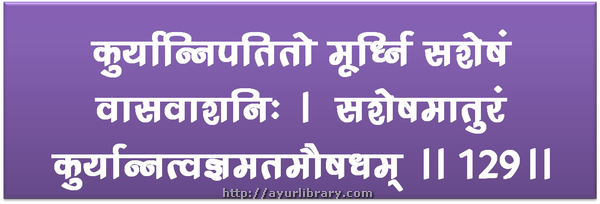
“kuryānnipatito mūrdhni saśeṣaṃ vāsavāśaniḥ | saśeṣamāturaṃ kuryānnatvajῆamatamauṣadham || 129||”
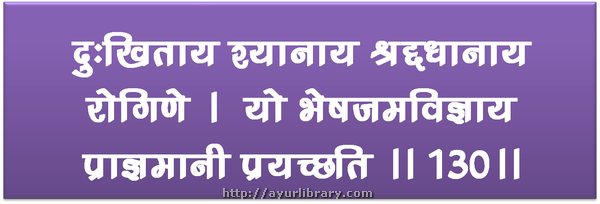
“duḥkhitāya śyānāy sraddadhānāya rohiṇe | yo bheṣajamavijῆāya prājῆamānī prayacchati || 130||”
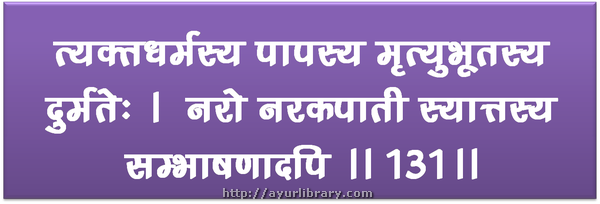
“Tyaktadharmasya pāpasya mṛatyubhūtasya burmateḥ | naro narkapāti syāttasya sambhāṣaṇādapi || 131||”
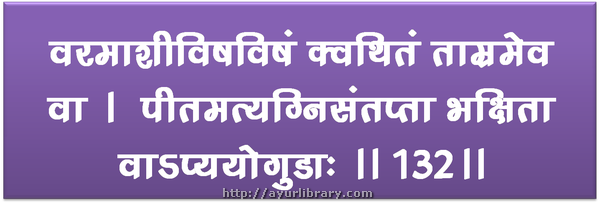
“Varamāśīviṣaviṣaḥ kvathitaḥ tāmrameva va | pitamatyagnisaṃtaptā bhakṣitā vāpyayoguḍā || 132||”
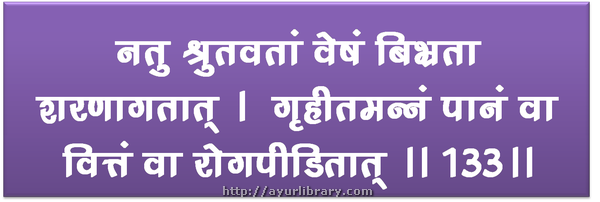
“Natu śrutavatāṃ veṣaṃ bibhratāt śaraṇāgatāt | gṛhītamannaḥ pāṃ vā vittaṃ va rogapīḍitāt || 133||”
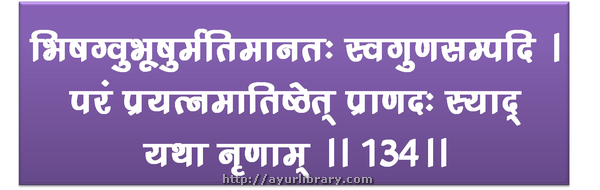
“Bhiṣagvubhūrmatimānataḥ svaguṇasampadi | paraṃ prayatnamātiṣṭhet prāṇadaḥ syād nṛṇām || 134||”
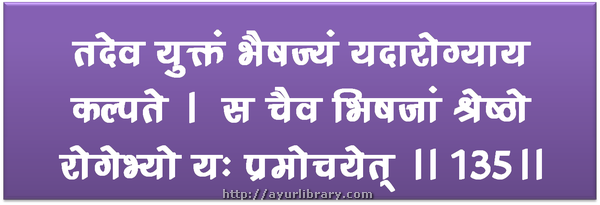
“Tadeva yuktaṃ bhaiṣajyaṃ yadarogyāya kalpate | sa caiva bhiṣajā śreṣṭho rogebhyo yaḥ pramocayet || 135||”
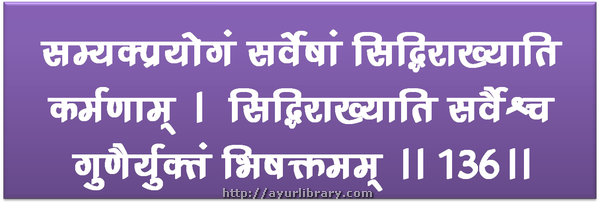
“Samyakprayogaṃ sarveṣā siddhirākhyāti karmaṇām | siddhirākhyāti sarvaiśca guṇairyuktaṃ bhiṣaktamam || 136||”
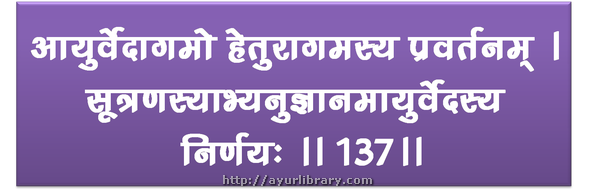
“āyurvedāgamo heturāgamasya pravartanam | sūtraṇasyābhyanujῆānamāyurvedasya nirṇayaḥ || 135||”
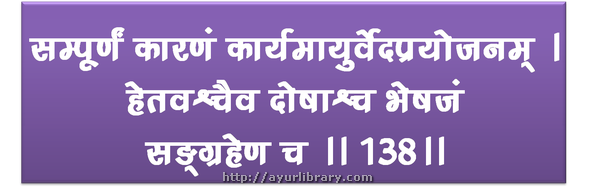
“Sampūrṇaṃ kāraṇaṃ kāryamāyurvedaprayojanam | hetavaścaiva doṣāṣca bheṣajaṃ saṅgraheṇa ca || 138||”
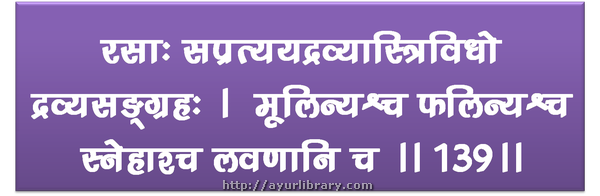
“Rasāḥ sapratyayadravyāstrividho dravyasaṅgrahaḥ | mūlinyaśca phalinyaśca snehāśca lavaṇāni ca || 139||”
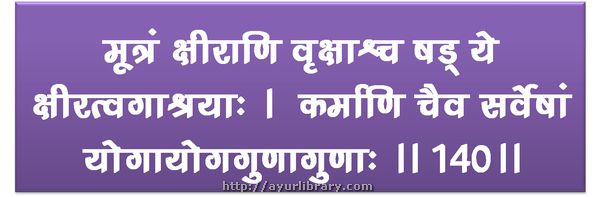
“Mūtraṃ kṣīrāṇi vṛkṣāśca ṣaḍ ye kṣīratvagāśrayāḥ | karmāṇi caiva sarveṣaṃ yogāyogaguṇāguṇāḥ ||140||”
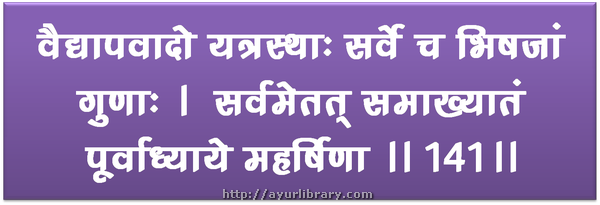
“Vaidhāpavādo yatrasthaḥ sarve ca bhiṣajāṃ guṇāḥ | sarvametat samākhyātaṃ pūrvādhyāye maharśiṇā || 141||”
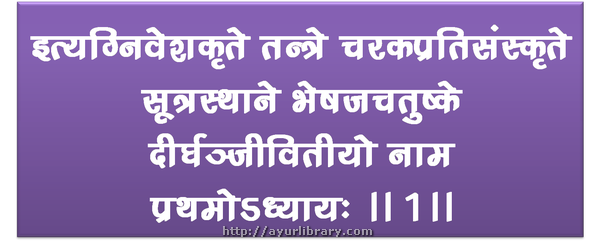
“Ityagniveśakṛte tantre carakapratisaṃskṛte sūtrasthane bheśajacatuṣke dīrghaῆjīvītīyo nām prathamodhyāyaḥ || 1||”
[/text_block]
Continuing Education Unit